Home / Articles
Most Common Vision Problems in Children and How to Treat Them
Home / Articles
Most Common Vision Problems in Children and How to Treat Them
A child’s first smile at a parent, their joy when they recognize a favorite toy, the excitement of discovering letters in a book—so much of childhood is filtered through vision. For most parents, eyesight is something we take for granted until a problem appears. But what if your child’s world has always been blurry? What if they’ve never known what “clear” vision feels like?
At Global Ubal Eye Center in Incheon, we’ve met many families who only discovered their child’s vision problem after a teacher raised concerns, or after the child began avoiding certain activities. It’s a sobering reminder: children don’t complain about bad eyesight the way adults do, because they often assume what they see is “normal.”
This is why pediatric eye health matters so deeply. Childhood is a critical window for visual development. When problems are detected and treated early, we can prevent long-term damage, protect learning, and give children the confidence to engage fully with the world around them.
In this article, we’ll walk through the most common vision problems in children, how to recognize them, and what treatments are available. We’ll also share insights from our clinic’s experience—because treating children’s eyes is not only about precision medicine, but also about understanding their emotions, family dynamics, and hopes for the future.
But here’s the challenge: young children rarely know they have a vision problem. A child who cannot see the blackboard clearly may simply think everyone sees the world that way. Instead of saying, “I can’t see,” they may avoid reading, lose interest in sports, or even develop behavioral issues.
As ophthalmologists, we often meet families who feel guilty for not noticing earlier. But the truth is, these issues can be subtle. What matters most is regular screening and a willingness to pay attention to small cues—squinting, rubbing eyes, sitting too close to the TV, or holding books very near the face.
The majority of childhood vision problems fall into this category.
In South Korea and other parts of East Asia, myopia has reached epidemic levels. Children spend more time on digital devices and less time outdoors, both of which contribute to earlier and faster progression of nearsightedness. We often see primary school children already needing glasses with strong prescriptions.
Glasses are the most straightforward and effective option for most children.
In rare cases, especially in teenagers, soft contact lenses may be considered with parental supervision.
Amblyopia is one of the most misunderstood childhood conditions. It happens when one eye is weaker, and the brain begins to “ignore” it. Over time, this eye doesn’t develop normal vision.
The tricky part? Amblyopia usually doesn’t cause obvious symptoms. A child might not complain, and parents might only notice an eye drifting occasionally. Teachers may be the first to flag concerns when a child struggles with reading or coordination.
Corrective glasses to address refractive errors.
In some cases, vision therapy exercises designed to retrain the brain.
Timing is critical. Amblyopia treatment is most effective before age 7, when the brain’s visual system is still flexible. After that, improvements are harder to achieve. That’s why routine screenings—even when children seem fine—are so important.
Strabismus is when the eyes are misaligned—one may turn inward, outward, upward, or downward. Parents sometimes notice this in photographs, where one eye seems to be “looking elsewhere.”
Strabismus isn’t just cosmetic. When the eyes don’t work together, depth perception suffers, and the brain may begin ignoring one eye, leading to amblyopia.
Glasses may correct some cases, especially when the misalignment is linked to refractive errors.
Eye exercises or vision therapy can help strengthen coordination.
Surgery may be needed to adjust the muscles controlling eye movement.
At Global Ubal Eye Center, we use advanced techniques to restore natural eye alignment while ensuring the best possible visual function. Parents often tell us how transformative it is—not just for their child’s vision, but for their confidence and social interactions.
While cataracts are usually associated with aging, they can also occur in infants and young children. Congenital cataracts cloud the natural lens of the eye, blocking normal vision development.
Sometimes, the cataract is small and doesn’t interfere significantly with sight. But in more serious cases, it can cause permanent vision impairment if not treated early.
Surgical removal of the cloudy lens, often followed by the implantation of an artificial intraocular lens.
Post-surgery, children may still require glasses or contact lenses to fine-tune their vision.
At Global Ubal Eye Center, we’ve seen how timely cataract surgery can restore a child’s ability to see clearly and allow their visual system to develop normally.
This is a rare but serious condition where increased pressure inside the eye damages the optic nerve. Unlike adult glaucoma, pediatric glaucoma may present with more visible signs: unusually large eyes, excessive tearing, or sensitivity to light.
Surgery is often required to lower eye pressure and protect the optic nerve.
Ongoing monitoring is crucial, as pediatric glaucoma is a lifelong condition.
Because it’s so rare, many parents are unaware of this condition until a specialist identifies it. Our clinic provides both surgical expertise and long-term follow-up care for these children and their families.
Eye health is not only about treatment—it’s about habits and prevention. Here’s what parents can do:
Children aren’t simply “small adults.” Their eyes are still developing, and their emotional needs during an eye exam require patience and empathy.
At Global Ubal Eye Center, we’ve tailored our approach for young patients:
Using equipment scaled for children.
Creating a child-friendly environment to reduce anxiety.
Explaining every step to parents so they feel confident in the care process.
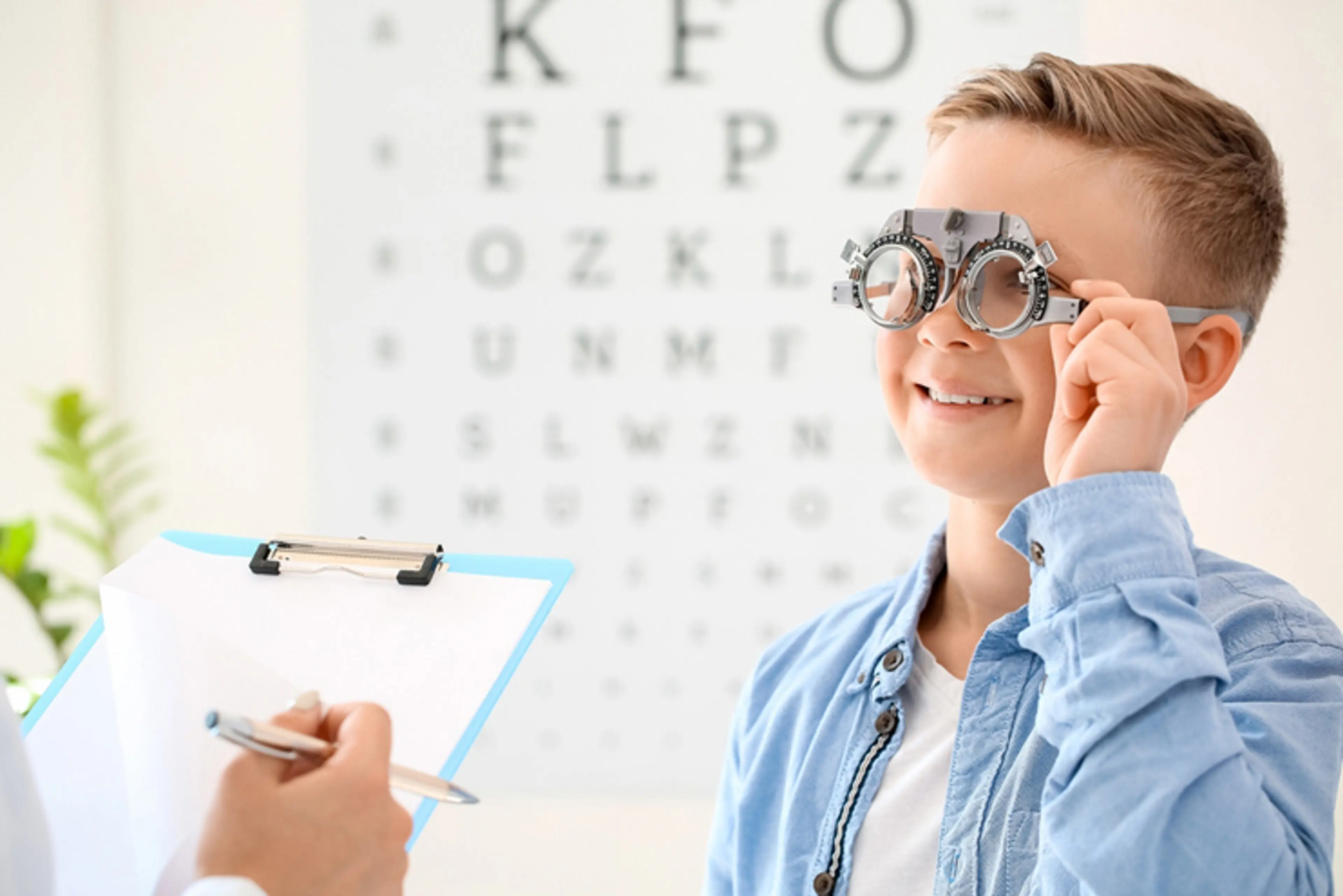
We often see children leave our clinic smiling—proudly wearing their first pair of glasses or relieved after a successful treatment. For us, that’s just as important as the clinical outcome: ensuring children feel safe, understood, and empowered.
Vision is a gift, and in childhood, it’s the gateway to learning, connection, and discovery. The most common vision problems in children—refractive errors, amblyopia, strabismus, congenital cataracts, and glaucoma—may sound daunting, but with early detection and proper care, most can be successfully managed.
The key is awareness. Parents who know the signs, schedule regular checkups, and seek expert care give their children the best chance at clear, healthy vision.
At Global Ubal Eye Center in Incheon, we bring over two decades of experience to pediatric eye care. With advanced technology, compassionate care, and a team led by Dr. Heecheol Bae, we’re committed to ensuring every child sees the world as brightly and clearly as possible.