Introduction
introductionFor years, the decision for many patients in the CIS region seeking world-class eye care was a choice between the technical precision of Japan and the rising medical power of South Korea. Today, however, the data is clear: Seoul has become the definitive destination for Vision Correction. While Tokyo offers high standards, it comes with a "premium" price tag that often exceeds the budget of international travelers. In contrast, South Korea has optimized its medical infrastructure to provide even more advanced surgical options—like SMILE Pro—at a price point roughly 30% lower than Japanese clinics.
Choosing South Korea isn't just a financial decision; it is a choice for efficiency and innovation. The Korean medical model is built on high-volume success, allowing clinics to invest in the newest German and American laser platforms before they become mainstream elsewhere. This article explores how you can access the world’s most advanced Vision Correction in Seoul, saving significantly while receiving care from surgeons who lead the global field in successful outcomes.
Why South Korea Is the Global Leader in Vision Correction
why-south-korea-is-the-global-leader-in-vision-correctionSouth Korea’s ophthalmology sector operates with a level of intensity unmatched anywhere else in Asia. The sheer density of eye clinics in districts like Gangnam has created a "Center of Excellence" where only the most technologically advanced and patient-centric clinics thrive.
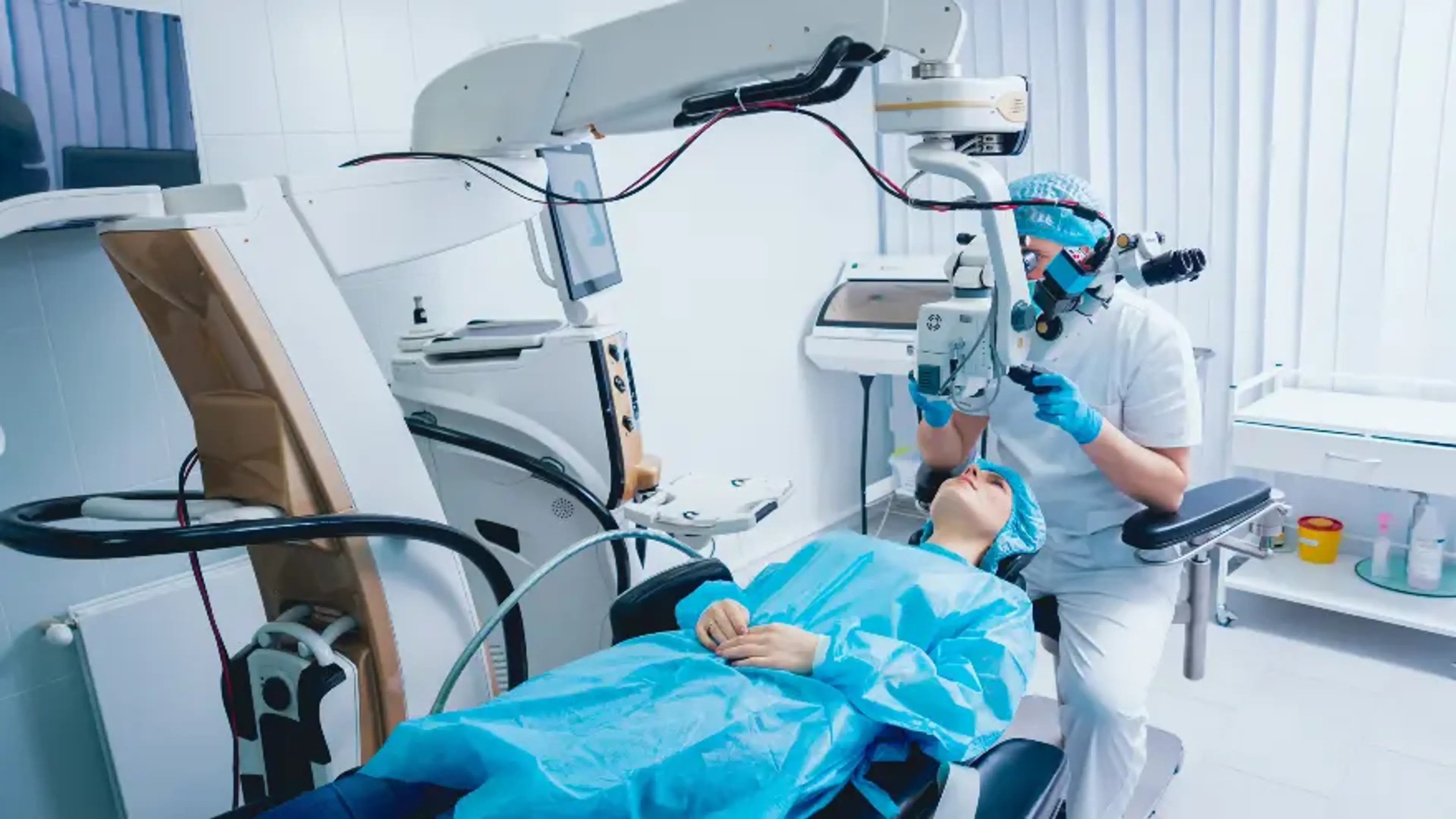
Access to the Latest Technology: Korean eye centers prioritize the "First-to-Market" approach. While many Japanese institutions are conservative with new equipment, Seoul’s top clinics already utilize the VisuMax 800 for SMILE Pro, which minimizes laser contact to a mere 10 seconds. This technology represents the absolute peak of current Vision Correction capabilities, offering faster healing than the older systems frequently found in other developed nations.
Unmatched Surgical Experience: Mastery comes from repetition. Korean surgeons often perform triple the number of annual surgeries compared to their counterparts in Japan or Europe. This high frequency means that even the most complex corneal shapes or high prescriptions are routine for a Seoul-based specialist. When you sit in the surgeon's chair, you are benefiting from tens of thousands of hours of refined clinical expertise.
AI-Integrated Diagnostics: The integration of "Smart" technology ensures that human error is virtually eliminated. Using AI-driven diagnostic software, Korean clinics can simulate your post-operative vision with 99% accuracy. This data-heavy approach allows for a level of customization in your Vision Correction plan that was impossible just five years ago.
Understanding Your Procedure Options
understanding-your-procedure-optionsSelecting the right surgery is a collaborative process between you and your surgeon, based on your lifestyle and eye health.
SMILE and SMILE Pro: This is the current gold standard for patients who want a fast return to active life. Because there is no flap created, the structural integrity of the eye remains almost entirely intact.
Benefits: Ideal for those with dry eye concerns and those who want to return to the gym or work the very next day.
SMILE Pro: Utilizes lightning-fast laser technology to complete the reshaping process in just 10 seconds per eye.
LASIK: This remains a favorite for patients seeking "instant" visual improvement. Modern All-Laser LASIK uses a femtosecond laser to create a precise flap, followed by an excimer laser to correct the vision.
Benefits: Extremely high patient satisfaction rates and high-definition clarity within hours.
LASEK: For patients with thin corneas who were previously told they weren't candidates for surgery, LASEK offers a safe alternative. It avoids flap creation entirely by treating the surface of the cornea.
Benefits: The safest choice for professional athletes or those in high-contact professions.
ICL (Implantable Collamer Lens): When the prescription is too high for laser reshaping, ICL provides an "internal contact lens" solution. The lens is placed behind the iris, providing permanent, crystal-clear vision without removing any corneal tissue.
Benefits: Completely reversible and offers the best night-vision quality for high-myopia patients.
The Cost Advantage: Saving 30% Compared to Japan
the-cost-advantage:-saving-30percent-compared-to-japan
The 30% price gap between Korea and Japan is not a reflection of quality, but of medical economics. Japan’s healthcare costs are driven by high administrative overhead and a lack of specialized medical tourism infrastructure. South Korea, however, has built its eye clinics for global efficiency. By treating a higher volume of international patients, Seoul's clinics can offer "Platinum Tier" Vision Correction at a fraction of the cost found in Tokyo or Osaka.
Transparency and All-Inclusive Pricing: Unlike many Japanese clinics that bill for every eye drop and follow-up separately, Korean clinics utilize a transparent, all-in-one pricing model. This allows international patients to budget their trip with 100% certainty.
Procedure Type | Average Cost in Japan | Average Cost in South Korea | Estimated Savings |
|---|
SMILE Pro | Premium / Rare | Lowest Global Rate | ~30% - 35% |
All-Laser LASIK | High | Standardized / Value | ~25% |
ICL (Lens Implant) | Very Expensive | High-Volume Efficiency | ~30% |
Pre-Op Screening | Separate Fee | Included / 50+ Tests | Significant |
The 50-Point Eye Exam: Maximum Safety Standards
the-50-point-eye-exam:-maximum-safety-standardsSafety is the foundation of the Korean medical experience. Before any
Vision Correction procedure is approved, patients undergo a rigorous "Safety First" screening process involving 50 distinct tests.
Corneal Topography: Creating a 3D digital map of the eye to detect even invisible irregularities.
Genetic Screening: Testing for the Avellino gene to ensure laser surgery will not cause long-term complications.
Epithelial Mapping: Measuring the thickness of the eye’s layers to ensure enough tissue remains for lifelong stability.
Visual Field Testing: Confirming the overall health of the optic nerve and peripheral vision.
By identifying non-candidates early, Korean clinics maintain one of the highest safety records in global ophthalmology.
Logistics for Patients from Russia and the CIS
logistics-for-patients-from-russia-and-the-cisNavigating a medical trip to Seoul is designed to be as simple as a local doctor's visit. High-tier clinics have dedicated "Russia Desks" to handle the specific needs of patients from the CIS region.
Professional Translators: From the moment you enter the clinic, you are paired with a medical coordinator who speaks fluent Russian. They translate the technical details of your exam and remain with you in the operating room.
One-Day Treatment: Recognizing that time is valuable for travelers, the "One-Day" system allows for the morning exam and afternoon Vision Correction surgery, reducing the need for long hotel stays.
Ease of Travel: With streamlined visa processes and multiple flight options, Seoul is more accessible than ever for patients seeking a world-class medical upgrade.
Risks and Safety Protocols
risks-and-safety-protocolsWhile modern Vision Correction is incredibly safe, Korean clinics take extra precautions to mitigate risks like temporary dryness or light sensitivity. Every laser used is FDA-approved and monitored by AI systems that can halt the procedure instantly if the eye moves. Furthermore, the use of the newest "cold laser" technology in SMILE Pro ensures that the eye tissue is not exposed to excess heat, which dramatically speeds up the healing process.
Frequently Asked Questions
frequently-asked-questions1. Is Vision Correction In Korea Safer Than In Japan?
is-vision-correction-in-korea-safer-than-in-japanBoth countries maintain high safety standards, but Korea’s higher surgical volume and faster adoption of next-generation technology, like the SMILE Pro system, often provide more precise results and a more specialized patient experience.
2. Why Is The Cost 30% Lower For Premium Services?
why-is-the-cost-30percent-lower-for-premium-servicesThe price difference is a result of medical efficiency and competition. Because Korean clinics treat a higher volume of patients, they can distribute the cost of expensive technology more effectively, passing the savings on to you.
3. How Long Is The Recommended Stay In Seoul?
how-long-is-the-recommended-stay-in-seoulA stay of 3 to 5 days is usually sufficient. This allows for the comprehensive initial exam, the surgery, and a mandatory follow-up appointment the next day to ensure your eyes are healing perfectly.
4. Are There Russian-Speaking Staff Available For Every Step?
are-there-russian-speaking-staff-available-for-every-stepYes. Top-tier vision centers in Seoul employ professional Russian-speaking medical coordinators who will assist you with everything from filling out medical forms to explaining the surgeon’s instructions during the procedure.
5. What Happens If I Am Not A Candidate For Laser Surgery?
what-happens-if-i-am-not-a-candidate-for-laser-surgeryDuring your 50-point diagnostic exam, if the surgeon finds that laser surgery is not safe for you, they will explore alternatives like ICL (Implantable Collamer Lens) or suggest other treatments to protect your long-term eye health.
Conclusion
conclusionInvesting in your sight is one of the most significant decisions you will ever make. By choosing South Korea over Japan, you are opting for a destination that offers a 30% cost advantage without sacrificing—and often exceeding—the technological standards of the West. From the precision of SMILE Pro to the safety of the 50-point eye exam, the Korean path to 20/20 vision is designed for excellence. Stop settling for the daily inconvenience of glasses and contact lenses. Experience the global "Platinum Standard" of care in Seoul and see the world clearly again. Click here to fill out our Inquiry Form and schedule your virtual consultation with a Korean vision specialist today.
Click here to fill out our Inquiry Form and schedule your virtual consultation with a Korean eye specialist today.